
Inside the Mechanics of Chromosome behavior
By: Thanu Kalikiri
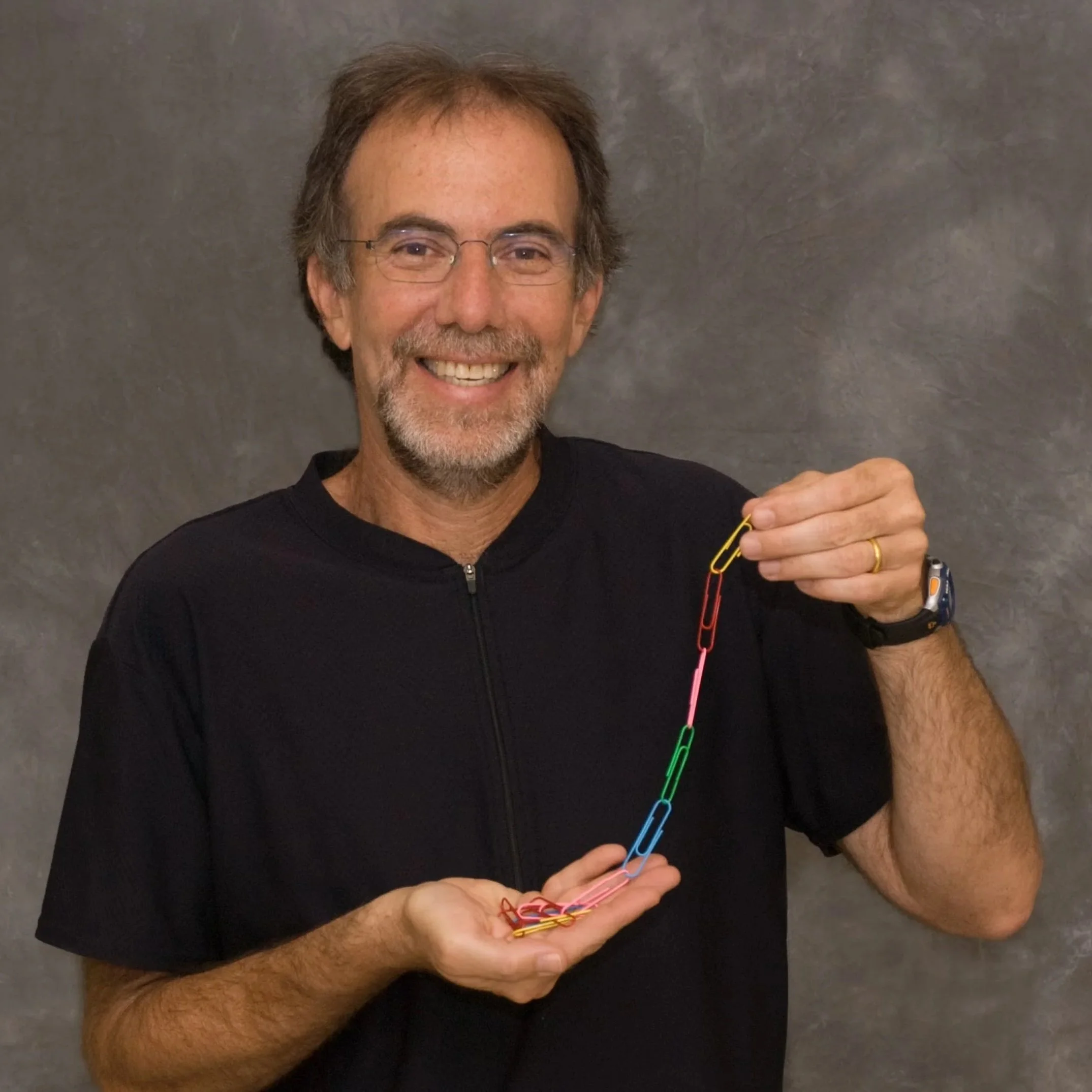
Dr. Kerry Bloom
Inside every cell lie invisible forces that constantly move and reshape chromosomes. When this process is disturbed, it can lead to significant consequences. Chromosomes are dynamic systems that organize and tightly package DNA. This DNA consists of genes that determine an organism’s traits. Several physical and molecular principles govern chromosomal behavior. These principles not only determine chromosomal behavior but also contribute to genome regulation. Studying how chromosomes respond to mechanical stress, genomic manipulations, and chromosome segregation, as well as chromatin behavior during cell division, can provide insight into how cells maintain genomic stability. Dr. Kerry Bloom, Thad L Beyle Distinguished Professor and Chair of Biology at the University of North Carolina at Chapel Hill (UNC Chapel Hill), and the Bloom Lab do just this. They investigate how physical forces within cells and how DNA is arranged and separated during cell division can go wrong, leading to errors that can cause severe diseases like cancer. They do so by “utilizing live-cell imaging, molecular genetics, and statistical physical modeling to reveal how chromatin behaves as a responsive and mechanically active material in space and time.” 1 Dr. Bloom's exposure to research began early in his undergraduate years at Tulane University, during which he planned to attend medical school. However, as he started working in a lab, he quickly discovered that his passions lie within research. He stated that his decision to attend graduate school instead was an easy one, his reasoning being “I liked the idea that I would always be questioning what I was doing... I liked the idea that there is always a mystery in front of me.” 1 He attended graduate school at Purdue University and then landed his first job at UNC Chapel Hill, where he has been since. He expressed his love for the university's environment, where everyone was “warm” and “welcoming,” ultimately making it “home.” 1 His interest in exploring the complex world of centromeres, the region of a chromosome that holds two sister chromatids together, began during his postdoctoral work, when centromere biology was the laboratory's research project. He continued to explore his int erests ever since.
Dr. Bloom started at the “dawn” 1 of molecular biology. At this time, the field was just trying to figure out how to clone genes. They were assembling a parts list and gathering the pieces needed to make a chromosome that could segregate and move. Dr. Bloom’s contribution to this discovery was identifying centromere DNA and the centromere-binding proteins that interact with microtubules and mitotic spindle components to ensure proper function. He stated that the process took decades. Once they had assembled the parts list, Dr. Bloom and his colleague, an expert in fluorescent microscopy (a technique that uses fluorescence to visualize and examine substances under a microscope), soon discovered they could observe the centromere moving in living cells using Green Fluorescent Protein (a protein derived from jellyfish that emits bright green that is used as a marker of gene expression). This discovery redirected his focus from the parts list to looking at the centromere in living cells, opening a whole new world. After years of analyzing live imaging data, Dr. Bloom realized he needed to better understand the physics of DNA, which led him into physics, computer science, and graphics. His newfound understanding of physics and computer science led him to build ChromoShake, a 3D model that allows researchers to model and predict how chromosomes are organized, move, and interact within a cell, in collaboration with computer scientists. He explains how the cell is a whole new world. If we drop a pencil from our hand, it falls to the ground because of gravity. In a cell, however, this never happens because there is no effective gravity. Everything is weightless because gravity is dominated by the viscosity of the fluid inside the cell. He states, “Our whole life’s experiences are in this gravity world. Now we’ve got to switch around and say, okay, this doesn’t happen inside a cell. What happens? If I’m living in a world where the rules are different, how am I supposed to gain intuition? So that’s what models like ChromoShake do,” 1 He acknowledges that they might not be 100% correct in predicting how chromosomes behave; however, with ChromoShake, they can simulate a world that is at least closer to what the cell is like, better than the world we live in.
In recent years, Dr. Bloom has been exploring centromere breakage under mechanical stress and its effects, explaining how genome instability can be an initiating event for cancer. When the genome breaks, i.e., chromosomal breaks or when chromosomes are mis-segregated and they do not separate into each daughter cell, instabilities can arise, ultimately leading to illnesses like cancer. He was shocked to find that the centromere, which is traditionally thought to be strong, can actually be a fragile site. Intuitively, centromeres may appear hard to break because they are under constant tension as cell structures pull sister chromatids toward opposite poles of the cell. The lab discovered that centromeres break more frequently than expected. Instead of preventing breaks entirely, the cell cycle checkpoints ensure that breaks are repaired before they cause long-term harm. Dr. Bloom describes this as “keeping your fireman right at the site so as soon as the fire goes off, we can put it out.” 1 To study chromosome breakage, the Bloom Lab uses engineering techniques to create dicentric chromosomes, which contain two centromeres instead of one. When a chromosome has two centromeres attached to opposite spindle poles, mechanical tension increases, often leading to breakage. By engineering these chromosomes, researchers can induce controlled breaks, allowing them to study how cells repair them.
Collaboration plays a significant role in Dr. Bloom’s past and current work; “I would not be where I am without collaboration. It’s huge.” 1 Diverse perspectives, backgrounds, and different ways of looking at things are essential in a workplace. He values collaboration not just with his colleagues but also with his students. He says he always wants his students to look at work in the lab because they’ll see it differently than he does.
Dr. Bloom is extremely passionate about mentorship. He believes that mentorship goes beyond teaching bench skills and instead cultivates confidence and independence, encouraging students to think critically. The most rewarding moments, he explains, are not just publications but watching the “light bulb” 1 go off when a student truly comprehends something.
Ultimately, although Dr. Bloom hopes his scientific contributions are published in textbooks, he emphasizes that his greatest legacy lies in the students he has trained. He underscores the importance of persistence in research. Experiments fail, hypotheses change, and the solution is not always obvious, but what makes a great scientist is the drive to keep going. What matters most to him is not fame or recognition, but the curiosity and collaboration that science sparks. His impact extends far beyond the world of centromere biology; it lives on in the young minds he has helped foster.
References:
Interview with Dr. Kerry Bloom, Ph.D. 02/24/2026