
Reading Between the Tabs of a Lab’s Website
Hi Carolina Scientific Community!
My name is Liz Zhang, and I am currently a freshman studying Neuroscience and Statistics. My goal in this and following Undergraduate Research Chronicle posts is to provide insight into getting started with research at UNC.
Today, we’re going to focus on the anatomy of a lab’s website. It is a surprisingly powerful tool, serving as the first place where you can get a sense of the lab’s structure and work culture. These are important considerations when assessing whether you may be a good fit.
Narrowing the Search
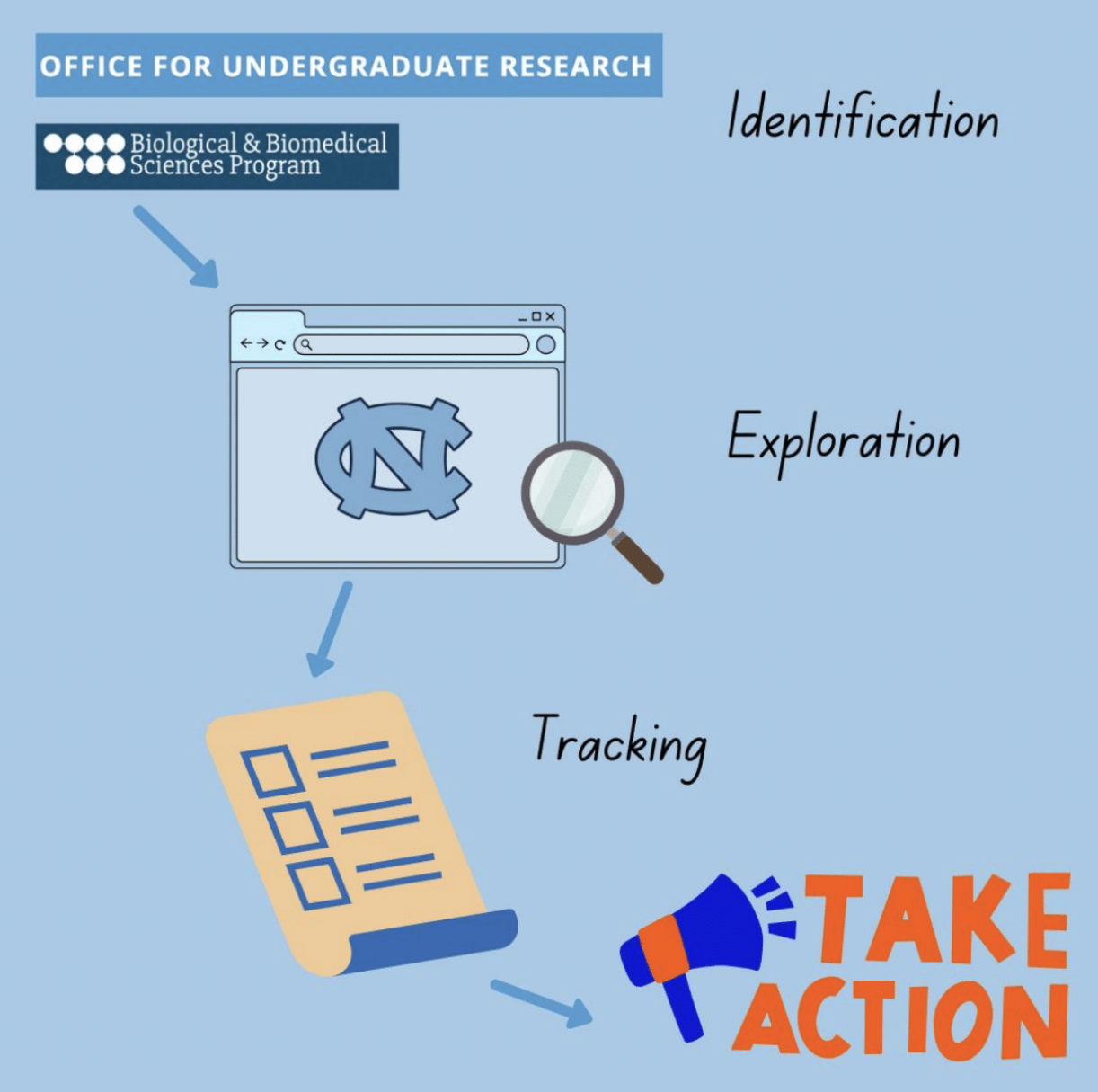
Prior to finding labs to reach out to, I wanted to highlight a couple of online strategies on narrowing the search! UNC’s Biological & Biomedical Science Programs lists all BBSP faculty along with their websites and descriptions of their research interests. Using filters for research areas (“Neuroscience” or “Immunology”) greatly improves the search.
UNC's Biological & Biomedical Science Programs
Department pages - Psychology, Biology, Chemistry, etc - makes finding specific faculty members, their research synopsis, and sites more accessible. However, keep in mind that some labs do not have websites. In these cases, utilizing available contact information can create initial points of communication.
If you find a specific UNC research institute intriguing such as the Bowles Center for Alcohol Studies (BCAS), clicking on individual researcher’s pages can also lead you to potential lab sites to explore.
Tip! Create a spreadsheet or database to track labs that catch your interest. It may be beneficial to note focus areas, key publications, and personal notes that you can refer to when drafting cold emails.
Notion Dashboard: I’ve created this template on Notion to serve as a starting point for tracking labs: Lab Interest Notion Dashboard. To use, simply press the duplicate button at the top right!
Anatomy of a Lab Website
The beauty of a lab’s website is that it is created entirely by the principal investigator (PI) and their team. A PI is the lead scientist who is responsible for designing, managing, and executingresearch projects in the laboratory.
Based on what you gather from the site, it can give you a taste of the lab’s culture. While the content and set-up for each website may vary, I’ve found patterns in the following sections that are universal across the board. Paying attention to the content can reveal a lot of whether you’d thrive in the lab’s environment!
Research Focus: This is usually found on the home page of any lab’s website. It will outline the largest questions of what the lab addresses. Think of it as the lab’s mission statement.
For example, the Alexanian Group emphasizes, “New modes of reactivity in transition metal catalysis,” indicating a focus on fundamental chemical innovations (Alexanian Lab). The Kim Lab focuses on, “How metabolism and metabolic enzymes in endothelial cells contribute to health and disease,” serving as a bridge for translational research (Kim Lab).
Before digging deeper into the site, pause to think about these overviews and whether they pique your interest. Note down your immediate responses to the lab’s objectives. You can use these later to provide an authentic tone when you’re reaching out.
Current Projects: The tab of the present moment! This can help you identify where an undergraduate research assistant might be valuable.
The following questions can likely be answered:
Where might I be able to contribute and integrate value into the lab? Are there any techniques that I might have to learn prior to joining the current lab team? What are currently open projects where a new research member could make a meaningful impact?
Tip! Since your goal is to reach out to this lab, it may be a good idea to make notes on one or two research projects the lab is working on that you see yourself contributing to. What skills do you have that may have a technical application for the project? Why does this part of the lab’s research spark your curiosity?
The lab will likely provide a brief description of the work, and if there are publications related to the research, links to those. Relevant publications are important reference materials to read prior to drafting emails.
Publications: The PI has a growing body of work that stems from their time prior to starting the lab which can provide historical context into the direction their research is going. It is important to review the publications section with an eye for a paper or two that you may want to reference in an email. If current work is building off past publications, this provides the opportunity to share questions or comments on specific aspects of the research you want to explore.
Tip! Don’t reference too many articles without being able to provide thoughtful comments or inquiries. Quality over Quantity here!
People/Members: A lab’s creativity is the sum of its team’s ideas. Every lab operates differently in terms of where an undergraduate researcher may find a role. In most cases, you may start by assisting a graduate student in their work, mastering lab techniques and gaining a better idea of the research process before graduating to your own project later. Thus, it is important to get an idea of the individuals and backgrounds you may have the opportunity to work with.
Quick guide to titles:
Postdoctoral Researcher: an individual that has earned their doctoral degree (PhD) who conducts research and training while working towards a more permanent career in academia or industry
Graduate Researcher: an individual working towards a doctoral degree under a PI’s direction
Post-baccalaureate Researcher: an individual who has recently graduated college and is gaining mentored research experience before applying to graduate or professional school
Lab Manager: an individual responsible for overseeing daily operations of a laboratory, including supervising staff, managing budgets and supplies, and ensuring efficient workflow
Laboratory Technician: an individual who performs experimental work, prepares reagents and samples, and supports research projects under the supervision of the PI
Based on the types of student researchers in the lab, you can get a sense of the what the mentoring style may be. In some labs, graduate student researchers may have their own research descriptions, making it easier to reach out to them as well.
Tip! If a graduate student’s research interests overlap with yours, you may want to reach out to them first. They will likely respond faster and provide more insight into the lab’s current situation.
News, Blog, Photos:
Lab Culture! The lab’s work is united under a scientific theme, but the people you collaborate with contribute heavily towards your experience. The Recent News and Photos section usually serves as a celebration of the work the lab has accomplished. In my own experience, I have been able to get a sense of what opportunities the lab provides in presenting undergraduate research, funding for personal endeavors, and general growth the lab is moving towards.
Photos are always fun: hikes, Halloween, dinners out on Franklin St... what activities does the lab group hold outside of making important discoveries?
Tip! Seeing undergraduates highlighted in presentations or showcases is a strong indication that mentorship is valued in the lab.
Contact/Join Page:
It’s time to act. Your primary goal after spending time understanding the lab’s website is likely to reach out. Some labs have clear instructions or a formal application process, while others may list contact information.
Undergraduate Office of Research has strategies on the best ways to reach out to a lab via cold email. If you’re stuck on templating, this article, https://our.unc.edu/find/emails-to-faculty/ is a great place to start.
Summarizing Your Exploration:
If you’ve worked through the entire lab website carefully, you should be able to reflect on the following:
How well your current skills and interests align with the lab
What the mentorship and research structure is like
Skills you can build throughout your time with the lab
Whether you genuinely see yourself enjoying the lab’s environment and contributing to the lab’s work
Answering these intentional questions will provide a more personalized and accurate communication with the lab!
Moving Forward:
Finding the right undergraduate research position will take time and persistence.By methodically gaining knowledge about the labs you are reaching out to, you are giving yourself an advantage over other generalized emails. Thoughtful preparation makes a huge difference! Perhaps this is as much of a reminder to me as to potential readers: approach this journey with an open mind and heart. Each lab you explore is one step closer to finding your own niche in science!